
Stable Micro Systems logo
Request a quote
  • Texture analysis
    • Texture Analysers
    • TA.XTplusC
    • TA.XTplus100C
    • TA.HDplusC
    • TA.XTExpressC
    • Compare Texture Analysers
    • Texture Analyser Buying Guide: 7 questions you need to ask
    • Software
    • Upgrades
    • Learn
    • Why measure texture?
    • How a Texture Analyser works
    • A beginner’s guide
    • What is food texture?
    • Texture Profile Analysis (TPA)
    • Texture analysis properties
    • Application areas
    • Speed up your testing
    • Case Studies
    • Attachments and accessories
    • Probes
    • Attachments
    • Acoustic Envelope Detector
    • Video Capture and Synchronisation System
    • Automated Linear Indexing System
    • Temperature Control
    • Dough Inflation System
    • Dynamic Integrated Balance
    • Penetrometer
    • IDDSI System
    • Egg Quality Testing System
    • Accessories
    • Custom design service
    • Test types
    • Puncture and penetration
    • Compression
    • Cutting and shearing
    • Extrusion
    • Bend and flexure
    • Tension
    • Adhesion
    • Other test types
    • Applications
    • Food
      • Alternative proteins
      • Bakery
      • Cereals
      • Confectionery
      • Dairy
      • Gels and films
      • Fish
      • Fruit and vegetables
      • Meat
      • Pasta and noodles
      • Snacks
      • Petfood and animal feed
      • Powder and granules
    • Future and novel foods
      • 3D printed foods
      • Cell cultured foods
      • Foods containing CBD
      • Foods containing insects
      • Upcycled food
      • Vertically farmed foods
    • Reformulated foods
      • Free-from foods
      • Fortified foods
      • Low-in foods
      • Foods for dysphagia (IDDSI)
    • Materials and products
      • Adhesives
      • Electronics
      • Packaging
      • Gels and films
      • Innovative materials
      • Leather and textiles
      • Paper and cardboard
      • Polymers
      • Powder and granules
    • Pharmaceutical and medical
      • Dental
      • Medical devices
      • Pharmaceutical and medical
      • Pharmaceutical packaging
    • Cosmetics and personal care
      • Cosmetics and skincare
      • Personal care products
      • Hair and haircare products
    • Powders and granules
    • View all
  • Materials testing
    • Materials Testers
    • TA.HDplusC
    • TA.XTplus100C
    • Compare Materials Testers
    • Upgrades
    • Learn
    • What is materials testing?
    • Force testing
    • Materials testing properties
    • Application areas
    • Software
    • Case Studies
    • Attachments and accessories
    • Probes
    • Attachments
    • Acoustic Envelope Detector
    • Video Capture and Synchronisation System
    • Automated Linear Indexing System
    • Temperature Control
    • Dynamic Integrated Balance
    • Penetrometer
    • Resistance Conversion Unit
    • Accessories
    • Custom design service
    • Test types
    • Puncture and penetration
    • Compression
    • Cutting and shearing
    • Extrusion
    • Bend and flexure
    • Tension
    • Adhesion
    • Other test types
    • Applications
    • Materials and products
      • Adhesives
      • Electronics
      • Packaging
      • Gels and films
      • Innovative materials
      • Leather and textiles
      • Paper and cardboard
      • Polymers
      • Powder and granules
    • Pharmaceutical and medical
      • Dental
      • Medical devices
      • Pharmaceutical and medical
      • Pharmaceutical packaging
    • Cosmetics and personal care
      • Cosmetics and skincare
      • Personal care products
      • Hair and hair products
    • View all
  • Volume and density
    • Volscan Profiler
    • Volscan Profiler instrument
    • How the Volscan Profiler works
    • Measuring volume and density
    • Software
    • Technical specification
    • Accessories
    • Case Studies
    • Applications
    • Bakery
    • Eggs
    • Other foods
    • Materials
    • Hair
    • Ceramscan
    • Ceramscan instrument
    • How the Ceramscan works
    • Measuring ceramic density
    • Ceramic and advanced material tests
    • Software
    • Technical specification
    • Ceramscan Validation
  • Powder flow
    • Products
    • Powder Flow Analyser
    • TA.XTplusC Texture Analyser
    • Learn
    • How the Powder Flow Analyser Works
    • Why measure powder flow?
    • Typical powder flow problems
    • Vessel material options
    • Software
    • Technical specification
    • Powder examples
    • Powder flow instrument comparison
    • Case studies
    • Test types
    • What problem, what test?
    • Cohesion
    • Cohesion at 4 speeds
    • Caking
    • Powder Flow Speed Dependence
    • Compressibility
    • Consolidation and caking
    • Complementary powder tests
    • Understanding your powder flow test results
    • Applications
    • Food ingredients and blends
    • Pharmaceuticals / nutraceuticals
    • Cosmetics and personal care
    • Agriculture
    • Chemicals, additives and industrial
    • Batteries and advanced materials
    • 3D printing
  • Applications
    • Food
    • Alternative proteins
    • Bakery
    • Cereals
    • Confectionery
    • Dairy
    • Gels and films
    • Fish
    • Fruit and vegetables
    • Meat
    • Pasta and noodles
    • Snacks
    • Petfood and animal feed
    • Powder and granules
    • Future and novel foods
    • 3D printed foods
    • Cell cultured foods
    • Foods containing CBD
    • Foods containing insects
    • Upcycled food
    • Vertically farmed foods
    • Reformulated foods
    • Free-from foods
    • Fortified foods
    • Low-in foods
    • Foods for dysphagia (IDDSI)
    • Materials and products
    • Adhesives
    • Electronics
    • Packaging
    • Gels and films
    • Innovative materials
    • Leather and textiles
    • Paper and cardboard
    • Polymers
    • Powder and granules
    • Pharmaceutical and medical
    • Dental
    • Medical devices
    • Pharmaceutical and medical
    • Pharmaceutical packaging
    • Cosmetics and personal care
    • Cosmetics and skincare
    • Personal care products
    • Hair and haircare products
  • Discover
    • Resources
    • Blog
    • Request a brochure
    • Request an article
    • Published references
    • Recommended literature
    • YouTube channel
    • Subscribe to our newsletter
    • FAQs
    • Case studies
    • Food
    • Materials
    • Pharmaceutical and medical
    • Cosmetics, skincare and haircare
    • Volume and density
    • Powder flow
    • About us
    • Company profile
    • Why we are world leaders
    • Careers
    • News
  • Support
    • General
    • Software updates
    • Register a product
    • FAQs
    • Correct use of TPA
    • Glossary
    • User support
    • Technical support form
    • Test advice service
    • Macro writing service
    • Get a new manual
    • Education Zone
    • Tips for Exponent Connect users
    • Training courses
    • Contact your local distributor
    • Product maintenance
    • Calibration
    • Upgrade your instrument
    • UK maintenance plan
    • Latest news
    • Products
    • Research
    • Patents
    • Texture
    • Subscribe to our newsletter
  • Contact
    • Contact details
    • Find a distributor
    • Request a demonstration
    • Request a quote
    • Events and seminars
  • Login
    • Customers
    • Distributors
Request a quote

Further improvements to our Powder Flow Analysis capabilities
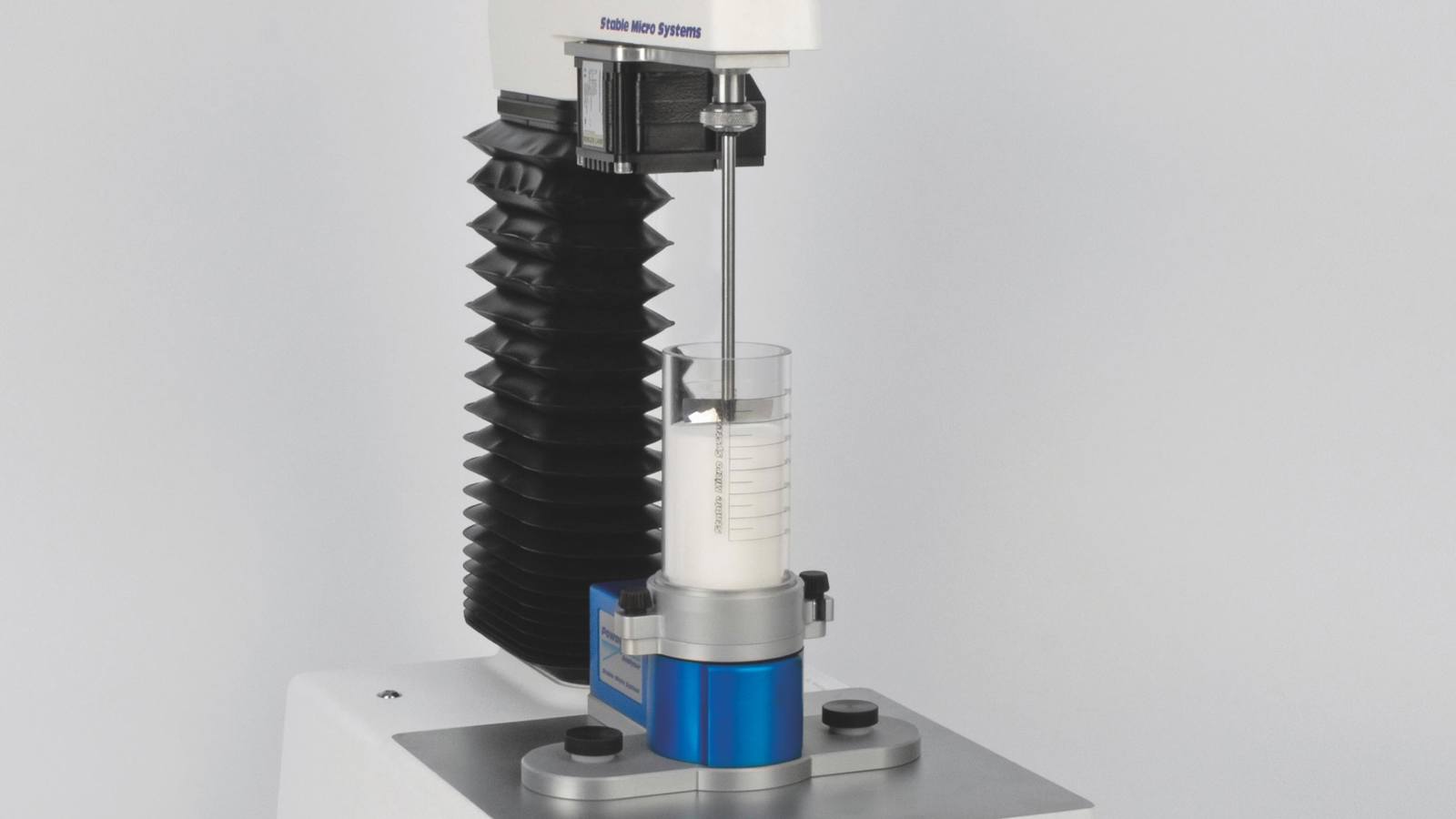
Mini Stickiness System attached to Texture Analyser

Users of the Powder Flow Analyser (PFA) will now be interested to know that we now have split vessels available for the measurement of bulk density, as well as a new probe which attaches to the PFA motor for the measurement of compressibility.

Using the split vessel, excess powder can now be discarded after the usual two conditioning cycles using the standard PFA blade. This leaves behind a precise volume of powder. Knowing this exact volume, along with the weight of the powder (that the PFA load cell measures), conditioned bulk density can be measured accurately and automatically.

The split vessel adds an extra benefit of a flat pre-compression surface once the extra powder has been discarded and the subsequent testing of volumes of sample that are exactly the same. At this point in the test project, the user is instructed to remove the PFA blade and attach the compressibility probe. Once the probe initially reaches the surface of the powder and registers a force of 10g, the “initial bulk density” is recorded.
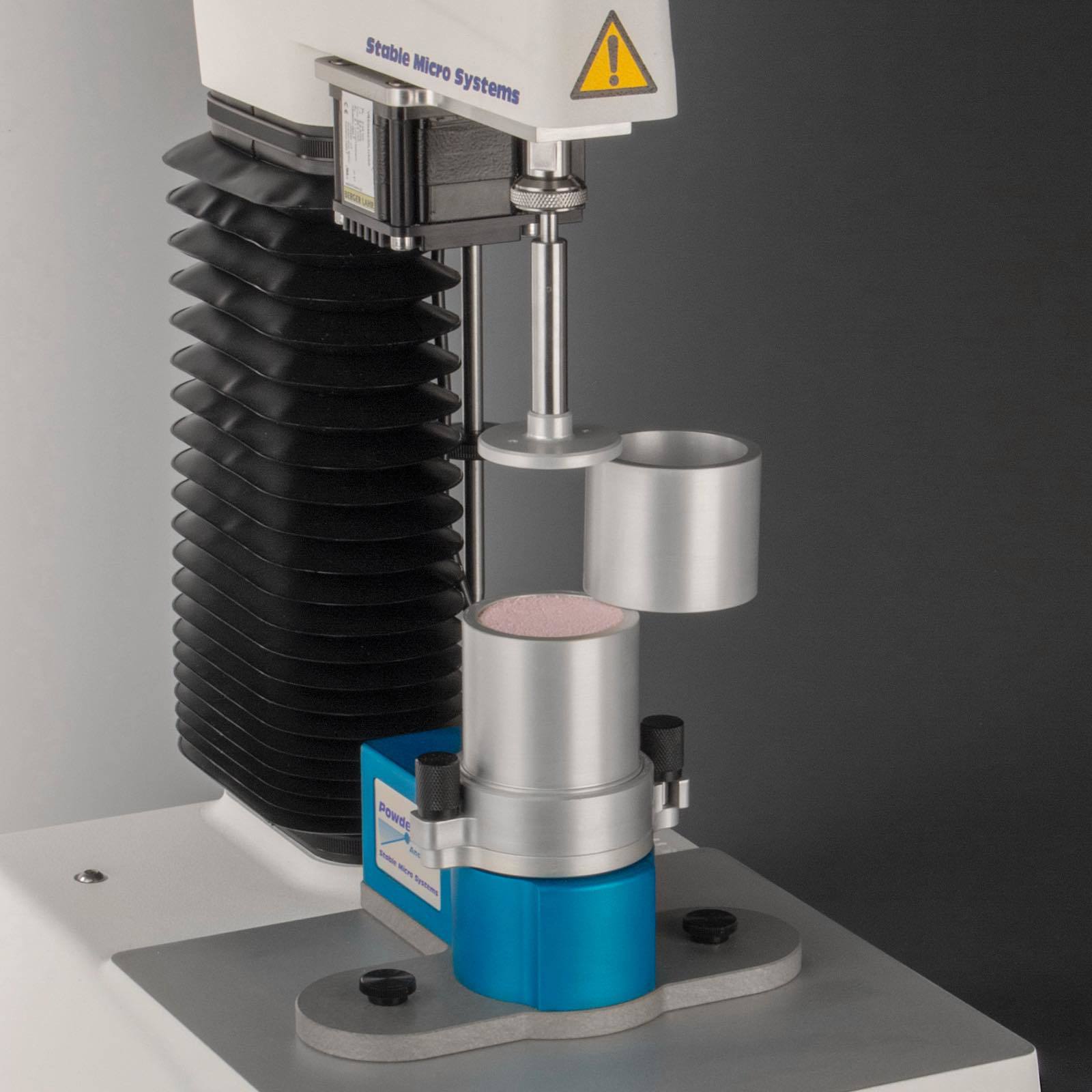
Powder Flow Analyser featuring split vessel with disc Powder Flow Analyser featuring split vessel with disc
Powder Flow Analyser featuring split vessel with blade Powder Flow Analyser featuring split vessel with blade

The probe continues to push on the powder until it reaches a force of 5000g. The more compressible the powder, the further the probe will travel during this time. Here, “compressibility” is defined as the ratio between the final and initial bulk densities:

Powder Compressibility Formula 01

This is equivalent to the Carr Index often used for powder analysis. In general, a more free flowing powder is less compressible (as the powder particles have already flowed into a more close-packed state). This corresponds to a small increase in bulk density with stress and a low compressibility.

A more cohesive powder tends to show the opposite behaviour and a high compressibility. Holes are present in the compression probe to allow for air pockets to be released during compression from the underlying powder column. Along with the measurement of Compressibility and Bulk Density additional parameters can also be measured within this test after it has been split into three sections: Stiffness, Relaxation and Elastic Modulus. Current users of the PFA projects will notice that projects in Exponent Connect have now been included to measure compressibility and existing projects updated to include the measurement of bulk density when using the split vessel.

To optimise 'walk away time' from the PFA, you may wish to use a new project that ties all three standard PFA tests together (cohesion, Powder Flow Speed Dependence (PFSD) and caking) and runs them sequentially on the sample – this new project is called ‘Three PFA Tests in One’.

This is now included in the sample PFA projects; it is not advisable on a sample that is likely to have a high degree of segregation or attrition, but may otherwise be found useful on many samples if sample quantity and test time are limited. It is highly recommended that the help file for each test is studied before performing the sequential test, so there is a good understanding of what each test does.

The project is set up to perform tests in order with cohesion first, followed by PFSD then caking. This order has been chosen so the least destructive tests are performed before the most destructive (caking) so the tests are most representative of using a new sample each time.

MORE INFORMATION

Request brochures about testing powders and granules

Request brochures about testing powders and granules

Request an article about measuring powder and granule properties

Request an article about measuring powder and granule properties

Learn more about testing powder and granules

Learn more about testing powder and granules

Learn more about us

Subscribe to our newsletter
Why we are world leaders
Read our blog
Home
  • Contact
  • Send us an enquiry
  • Request a quote
  • Request a demonstration
  • Find a distributor
Head office

+44 (0) 1483 427345
Vienna Court, Lammas Road
Godalming, Surrey, GU7 1YL
United Kingdom

Subscribe to our newsletter
  • LinkedIn
  • YouTube
  • X (formerly Twitter)
  • Facebook
Copyright © 2026 Stable Micro Systems. All rights reserved. Privacy and cookie policy Sitemap