

Texture design of breaded and battered foods
 3 minute read


Why texture design matters in coated foods
Batters and breadings provide visual identity, structural integrity and a large part of the sensory experience of coated products such as chicken, seafood, vegetables and plant-based analogues.
Deep fat or immersion frying remains one of the most widely used industrial processes to set these coatings, drive moisture transport, form a crust and develop flavour-active compounds. The resulting food microstructure governs key attributes such as crispness, crunch, hardness, adhesion and oil uptake, which in turn affect perceived quality, consumer acceptance and shelf stability.
For R&D teams, “texture design” is not a vague concept. It is a controllable outcome that arises from formulation, process conditions and post-processing handling, all of which can be quantified using texture analysis.
Key parameters in texture design of breaded and battered foods
Effective design of coatings for breaded and battered products requires consideration of several classes of variables:
-
Ingredient selection
- Particle size distribution of crumbs and pre-dust
- Protein and starch sources in batters (e.g. wheat, rice, modified starches, proteins)
- Leavening systems, hydrocolloids and fibres that influence porosity and water binding
-
Process conditions
- Batter viscosity and pick-up
- Bread crumb adherence and coverage
- Frying conditions, including oil temperature profile, residence time and product load
- Pre- and post-fry steps such as par-frying, baking or freezing
-
Packaging, storage and handling
- Moisture migration during chilled or frozen storage
- Reheating regime, for example oven, air fryer or microwave
- Condensation and steam management in retail packs
Texture design links these variables to the physicochemical changes that occur during processing. Moisture transport, starch gelatinisation, protein denaturation and crust formation combine to produce a specific microstructure that can be characterised and replicated.
Instrumental texture analysis of coated products
The Texture Analyser allows repeatable measurement of:
- Maximum force at first fracture (crispness / crust strength)
- Energy to break (hardness and crunch)
- Work done during compression or shear (overall bite)
- Adhesiveness, where relevant, between coating and substrate
Bulk testing using the Kramer Shear Cell
One of the most robust approaches for these heterogeneous products is bulk testing with a Kramer Shear Cell attachment. Breaded and battered items are rarely uniform in size or shape, which makes single-piece testing difficult to interpret.
By loading a known number or mass of pieces into the Kramer cell and applying simultaneous compression, shearing and extrusion, the test generates an averaged force profile representative of the batch. This “in bulk” method reduces variability and gives a more realistic picture of coating performance under consumer-relevant conditions, such as biting or cutting.
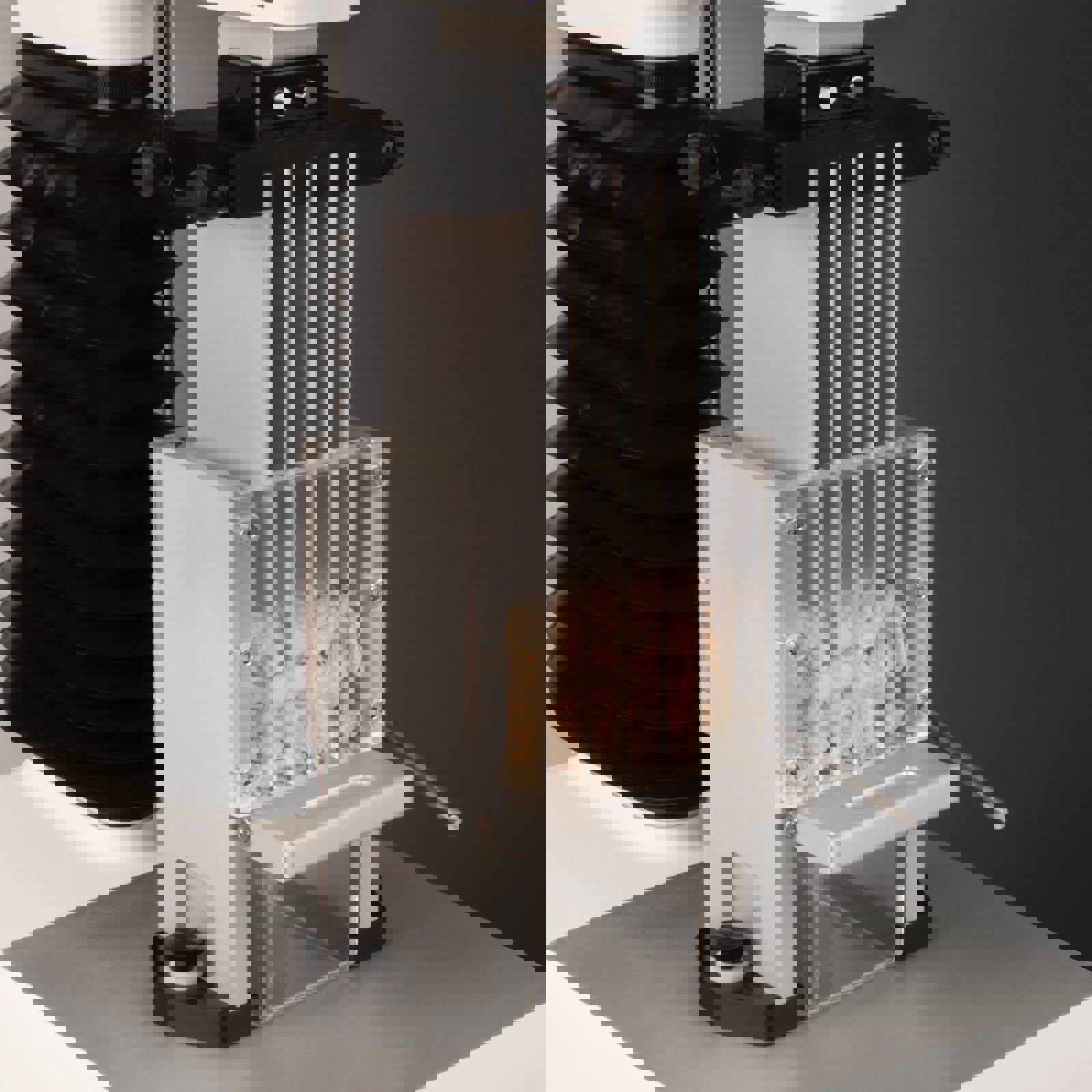 Kramer Shear Cell testing chicken

From microstructure to market-ready product
By combining controlled frying, microstructural understanding and instrumental texture analysis, developers can:
- Optimise coating systems for targeted crispness or crunch.
- Balance oil uptake against desired texture and nutritional targets.
- Quantify the impact of storage and reheating on texture degradation.
- Define robust quality control limits that can be implemented on production lines.
The methodology shifts texture from a subjective descriptor to a quantifiable, controllable parameter, aligning with modern data-driven R&D workflows and AI-ready product development pipelines.
Further reading and next steps
The chapter “Texture design for breaded and battered foods” in Food Texture Design and Optimization provides detailed discussion of formulation strategies, processing variables and instrumental methods, including the use of the TA.XTplusC Texture Analyser for coating characterisation. It is a useful reference for anyone working on coating systems, frying optimisation or sensory–instrumental correlation.


