

Hyper-texture – what it means and how to create it
 9 minute read


While "hyper-texture" is not a standard, scientific term in food science or culinary arts, it is a conceptual term that can be used to describe a specific and growing trend in food products. It can be understood as an extension of the broader concept of food texture, emphasising complexity, contrast, and multi-sensory experience.
In the context of food, hyper-texture refers to the intentional layering and combination of multiple, often contrasting, textures within a single product or dish to create a heightened and surprising sensory experience.
Here’s a breakdown of what this means in practice:
1. Combining contrasting textures
This is the most common application of the concept. Instead of a single, uniform texture, a product with hyper-texture will deliberately feature a mix of soft, crispy, creamy, and crunchy elements.
- Example 1: A "deconstructed" cheesecake
- Old way: A uniform, creamy slice of cheesecake with a single graham cracker crust.
- Hyper-texture way: A creamy cheesecake mousse served alongside a separate crumble of crunchy graham cracker, a layer of a silky fruit gel, and a scattering of fresh, firm berries. Each component offers a distinct texture that you experience with every bite.
- Example 2: A snack bar
- Old way: A chewy granola bar.
- Hyper-texture way: A bar with a soft, chewy interior, a smooth chocolate coating, and a generous topping of crispy rice puffs, crunchy nuts, and a layer of sticky caramel.
2. The multi-sensory experience
Hyper-texture goes beyond just how a food feels in your mouth. The combination of textures also influences sound and even visual appeal.
- Auditory: The term "crunchy" is often defined by the sound it makes when you bite into it. Hyper-textured products can be designed to produce a range of sounds, from a sharp crackle (like a thin wafer) to a loud crunch (like a roasted nut), all within the same bite.
- Visual: The different textures are often visually distinct, with ingredients like shiny gels, matte powders, and jagged crumbles creating a visually appealing product that promises a complex textural experience before you even take a bite.
3. Unexpected or novel textures
The concept also includes the use of textures that are new or surprising to the consumer. This is a common practice in molecular gastronomy and high-end cuisine.
- Example: Using hydrocolloids to create a foam that dissolves instantly in the mouth, or a sphere that "pops" with a burst of liquid, contrasting with a more traditional solid or chewable food component.
Without a doubt, the use of an Acoustic Envelope Detector and a Video Capture & Synchronisation System will raise your texture analysis game and elevate the possibilities of you capturing additional streams of data and being able to see textural features on a frame-by-frame basis.
Testing solution recommendations are the use of a small cylinder probe to penetrate and measure the force as the probe encounters each textural layer of the product, the slicing through the layers using a thin yet sharp Extended Craft Knife or the testing in bulk of a sample with heterogeneous nature using a Kramer Shear Cell.

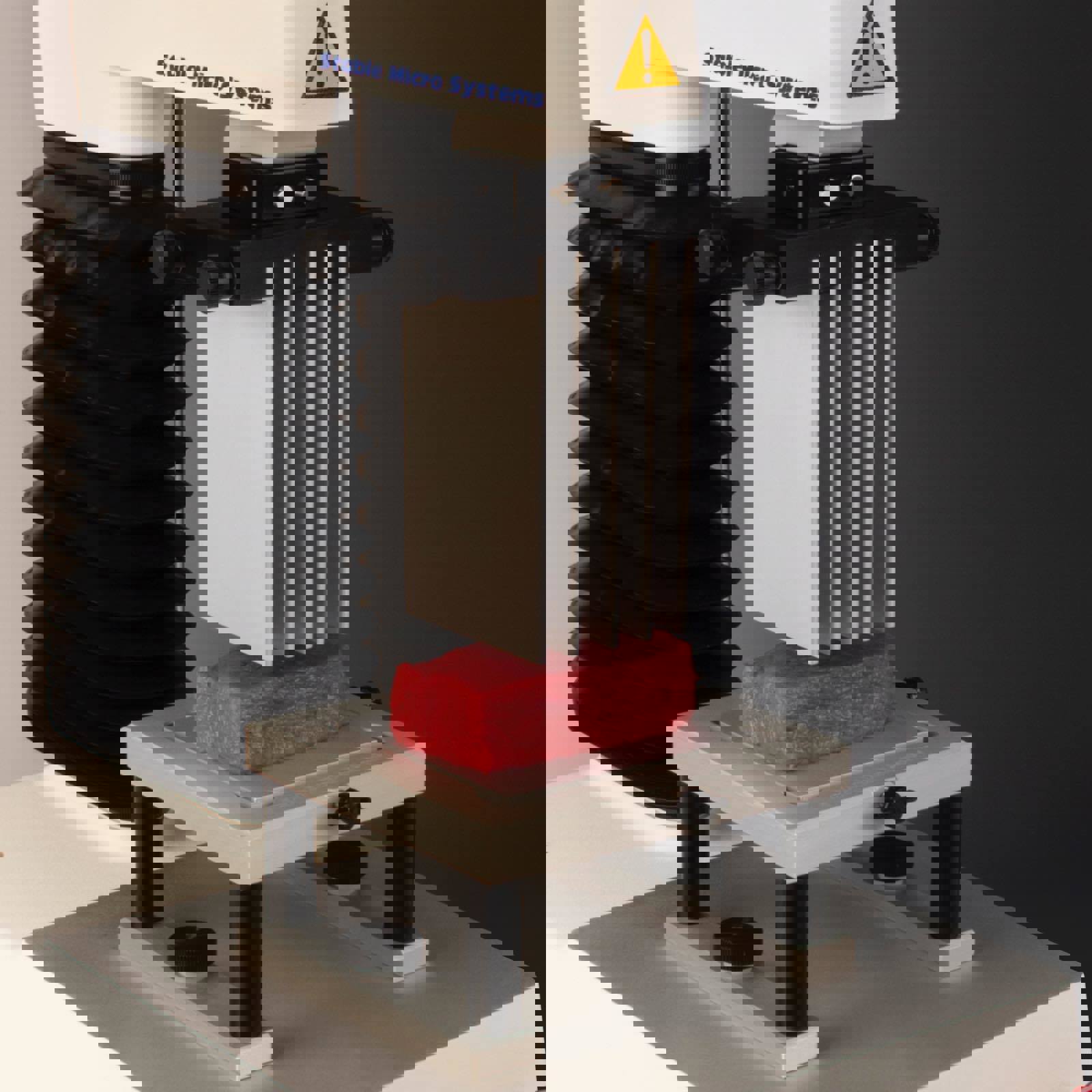
In short, hyper-texture in food is about creating a richer, more engaging, and often surprising eating experience by purposefully layering and contrasting textures, leading to a more complex and memorable product.
Here are some specific examples of hyper-texture in food products, breaking down the contrasting elements that create the layered sensory experience:
1. Kit Kat wafer bar
This is a classic and very successful example of hyper-texture in a simple snack.
- The crunch: The thin, brittle, and airy layers of wafer.
- The creaminess: The smooth chocolate coating that provides a soft, melt-in-your-mouth counterpoint to the wafer's snap.
- The combination: The user experiences a satisfying, audible crunch followed immediately by a smooth, creamy melt, all in one bite.
2. Tiramisu
This dessert is a masterclass in textural layering.
- The softness: The delicate, pillowy texture of the ladyfinger biscuits.
- The creaminess: The thick, silky, and rich mascarpone cream.
- The contrast: The fine, slightly bitter, and powdery cocoa dusting on top provides a contrasting, dry texture that melts on the tongue. The coffee-soaked biscuits are soft, but their porous structure provides a slight resistance before giving way, creating a multi-layered experience.
3. Granola and yogurt parfait
This common breakfast or snack item is a perfect example of deliberate textural contrast.
- The smoothness: The cool, creamy, and uniform texture of the yogurt.
- The crunch: The firm, crunchy, and often nutty texture of the granola clusters.
- The freshness: The crisp, juicy pop of fresh berries or sliced fruit.
- The combination: Each spoonful offers a different mix of sensations, from the smooth yogurt to the hearty chew of the granola and the burst of the fruit.
4. Cronuts and other hybrid pastries
These products are specifically designed to combine the textures of two different items.
- The flakiness: The hundreds of delicate, buttery layers of the croissant dough.
- The chewiness: The slightly denser, fried-dough chew of the doughnut.
- The topping: The smooth glaze or a layer of cream filling further adds to the textural complexity.
5. Molecular gastronomy dishes
High-end cuisine often uses hyper-texture to create a surprising and memorable experience.
- Example: A "Nitro-mousse" dessert
- The cold: A frozen mousse created with liquid nitrogen that is initially very hard and cold.
- The melt: It instantly melts into a smooth, creamy liquid in the mouth.
- The counterpoint: This can be served with a scattering of pop rocks for an explosive, carbonated sensation and a delicate tuile for a light crunch. The combined effect is a rapid sequence of hard, cold, melting, popping, and crunchy textures.
6. Chips and dip
This simple pairing is a fundamental example of hyper-texture.
- The crisp: The dry, thin, and brittle texture of the tortilla chip.
- The creaminess: The smooth, cool, and soft texture of the dip (e.g., guacamole or sour cream).
- The combination: The act of dipping and eating combines the sharp crackle of the chip with the creamy sensation of the dip, creating a satisfying and familiar textural contrast.
How can you create hyper-texture in food production?
Creating hyper-texture in food production is a deliberate process that involves combining multiple, often contrasting, textures through a variety of techniques. It can be achieved through both traditional cooking methods and modern food science and manufacturing processes.
Here are the primary ways to create hyper-texture in food production:
1. Layering and assembly
This is the most straightforward method, involving the physical layering of components with different textures.
- Process: Assembling a product with distinct layers of soft, creamy, and crunchy elements.
- Examples:
- Ice cream desserts: Layering smooth, creamy ice cream with a crunchy crumble, a brittle chocolate shell, and a soft caramel swirl.
- Yoghurt parfaits: Alternating layers of smooth yogurt, crunchy granola, and juicy fruit.
- Snack bars: Creating a bar with a chewy oat base, a layer of smooth caramel, a coating of brittle chocolate, and a topping of crunchy nuts or rice puffs.
2. Dehydration and frying
These processes remove moisture to create a brittle or crunchy texture, which can then be combined with softer elements.
- Process: Frying, baking, or freeze-drying to create crispy components.
- Examples:
- Crispy vegetables: Frying kale chips or dehydrating thin slices of carrots to add a crunchy element to a salad or soup.
- Baking for a crisp: Baking thin wafer layers (like in a Kit Kat) or creating a brittle tuile to serve with a soft mousse.
- Freeze-drying: Freeze-drying berries or other fruits to give them a light, airy, and intensely crispy texture that contrasts with a creamy base like yogurt or chocolate.
3. Emulsification and gelling
This involves using food science to create smooth, creamy, or gelatinous textures that can be paired with solid ingredients.
- Process: Using emulsifiers and stabilisers (like lecithin) to create smooth, stable emulsions (e.g., in dressings or sauces), or gelling agents (like agar-agar or gelatin) to create jellies, foams, and gels.
- Examples:
- Foams and spheres: Creating a light foam from a liquid that dissolves instantly, which can be served on top of a solid, crunchy biscuit.
- Gels and jellies: Creating a fruit-flavored gel that encases a crunchy ingredient like a nut or a piece of candy.
4. Extrusion and co-extrusion
Extrusion is a manufacturing process that uses heat and pressure to form food products. It is highly effective at creating a variety of textures.
- Process: A dough or food mixture is forced through a die to create a specific shape. The process can be controlled to create airy, puffed, or dense, brittle textures.
- Examples:
- Breakfast cereals: Creating a cereal with a dense, crunchy interior and a smooth, sugary coating.
- Snack foods: Co-extruding a snack to create an outer crunchy shell with a soft, creamy filling (e.g., some filled cracker snacks).
5. Using Ingredients with inherent textural properties
This involves selecting ingredients that already have a unique texture to be combined with others.
- Process: Integrating ingredients like popping candies, brittle toffee, or crispy puffed rice into a base.
- Examples:
- Chocolate bars: Adding brittle toffee bits, a chewy caramel layer, and crunchy rice crisps to a smooth chocolate bar.
- Ice cream: Stirring in chunks of brownie (soft and chewy), caramel bits (firm and chewy), and chocolate chips (hard and meltable).
By mastering these techniques and intentionally combining them, food producers can create products that offer a complex, layered, and highly satisfying textural experience for the consumer.


