

Patents and texture analysis in food claim substantiation
 5 minute read


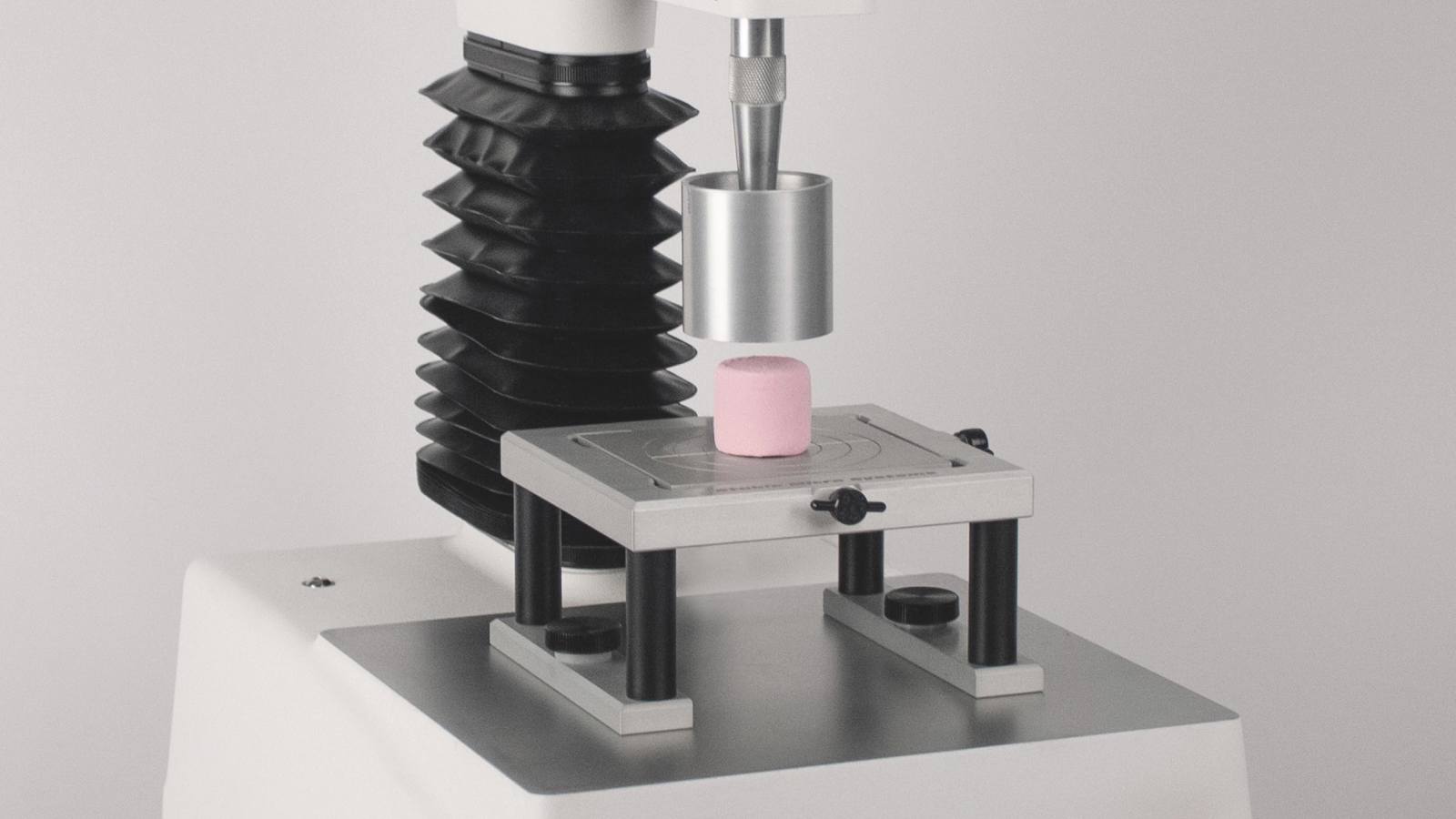
When R&D scientists invest years developing a novel food formulation, the last thing they want is a patent that can't be defended. Regulatory scrutiny, competitor challenges and the ever-rising bar of consumer expectations mean that qualitative descriptions of 'improved texture' or 'superior mouthfeel' simply don't cut it in a patent application. What separates a strong patent from a weak one is hard, reproducible, instrument-generated data - and across the global food industry, the Stable Micro Systems Texture Analyser has become the instrument of choice for generating exactly that.
Why claim substantiation matters
A patent claim is only as strong as the evidence behind it. Patent examiners routinely reject or narrow claims that rely on subjective sensory language. Courts in infringement proceedings demand quantitative proof that a claimed property actually exists and is measurably distinct from the prior art. For food scientists, this means translating attributes like 'crispiness,' 'springiness,' 'firmness' and 'cohesiveness' into objective force-distance curves with defined test protocols.
The Texture Analyser - with its precise load cells, programmable probe speeds and comprehensive Exponent software - is purpose-built for this task. Learn more about why texture measurement matters and the range of food applications supported.
Patent highlights across the food sector
Nestec
Confectionery - Gelled sweets with a liquid centre (WO2004084649)
The inventors used a Stable Micro Systems TA-HD Texture Analyser fitted with a 40 mm Cylinder Probe to run a Texture Profile Analysis (TPA) at 60% strain. Hardness, cohesiveness and resilience were each calculated from the resulting force curves and used to demonstrate how varying the ratio of kappa- to iota-carrageenan produced a shell with a distinctly different - and superior - bite profile versus prior art gelatin-based products. The TPA data made the carrageenan blend claims defensible at a level that sensory language alone never could.
Unilever
Dairy - Spreadable dairy product (WO2007006412)
Using a TA.HD Texture Analyser with a 20 mm Cylinder Probe the inventors established that the novel emulsifier-free shear-thickened spread achieves a maximum compression force of at least 20 g - measurably distinguishing it from the starting condensed milk material (4-10 g) and providing a clear numerical threshold for the claims. Without an instrument-generated figure, defining 'spreadable firmness' in a claim would be virtually impossible to enforce.
Fonterra
Dairy - Imitation cheese (WO2007049981)
The inventors used a TA-HD Texture Analyser to establish that the average peak force at 5°C falls between 150-200 N - firm enough to shred cleanly yet soft enough to melt properly. These twin numerical boundaries, both instrument-derived, gave the patent claims structural integrity that a description of 'shreddable and meltable' alone would never provide.
Friesland Campina
Dairy - Modified whey protein concentrate (US20160002288)
Using a TA-XT2 Texture Analyser with a 45mm Cylinder Probe the inventors established that their carbonate-processed whey protein concentrate achieves a gel strength exceeding 6,000 g - with a claimed preference for values above 6,500 g. Crucially, the patent also shows the gel strength is maintained, not reduced, upon salt addition - a property uniquely attributable to the process and directly substantiated by instrument measurement.
VTT Technical Research Centre
Alternative proteins - Fungal mycelium food product (WO2020074782)
This patent covering plant-based patties bound by fungal mycelium used a TA.XTplus Texture Analyser with a 20 mm Cylinder Probe to run a TPA test. The hardness data showed that mycelium-bound rice protein patties had measurably lower hardness than controls, approaching the profile of a real meat patty - a commercially critical property in the exploding alternative protein market that had to be quantified, not merely asserted.
Novozymes
Bakery - Baking enzyme composition as SSL replacer (WO2011026877)
This Novozymes patent covering a lipolytic enzyme composition as a replacement for SSL in bread baking used a TA-XTplus Texture Analyser to quantify both dough properties and finished bread softness and crispiness. The force-distance curves generated during compression of baked samples provided the numerical basis for claims of 'improved softness' and 'improved crispiness' that would otherwise be legally unenforceable.
Nestle
Fruit - Fruit firmness preservation (Nestlé) (WO1998052423)
This influential patent covering pectin esterase and calcium treatment for thermally processed fruits used a TA-HD Texture Analyser with an Ottawa Cell to measure maximum extrusion force and springiness. The data showed that treated strawberries and tomato pieces survived pasteurisation and sterilisation with significantly better firmness - a claim that would be commercially worthless if stated only in qualitative terms.
Mars Inc.
Pet food - Edible animal chew (WO2014155113)
This patent used a Stable Micro Systems TA-HDPlus to run TPA and rebound testing on dental chews, establishing specific cohesiveness thresholds (≥0.55) and cohesiveness/density ratios (≥0.65 g⁻¹cm³) that define the structural integrity required for effective dental cleaning action. These instrument-defined boundaries transformed a functional claim into something measurable, comparable and legally defensible.
The competitive advantage of quantitative data
Across confectionery, dairy, alternative proteins, bakery, fruit processing and pet food, a consistent pattern emerges: the world's leading food and ingredient companies are using the Texture Analyser not merely as a quality control tool, but as an IP generation platform. The instrument provides the quantitative layer that converts innovative ideas into defensible, monetisable intellectual property.
For R&D scientists, the implication is clear. Explore the full range of food texture analysis applications or browse food case studies.


