
Product overview
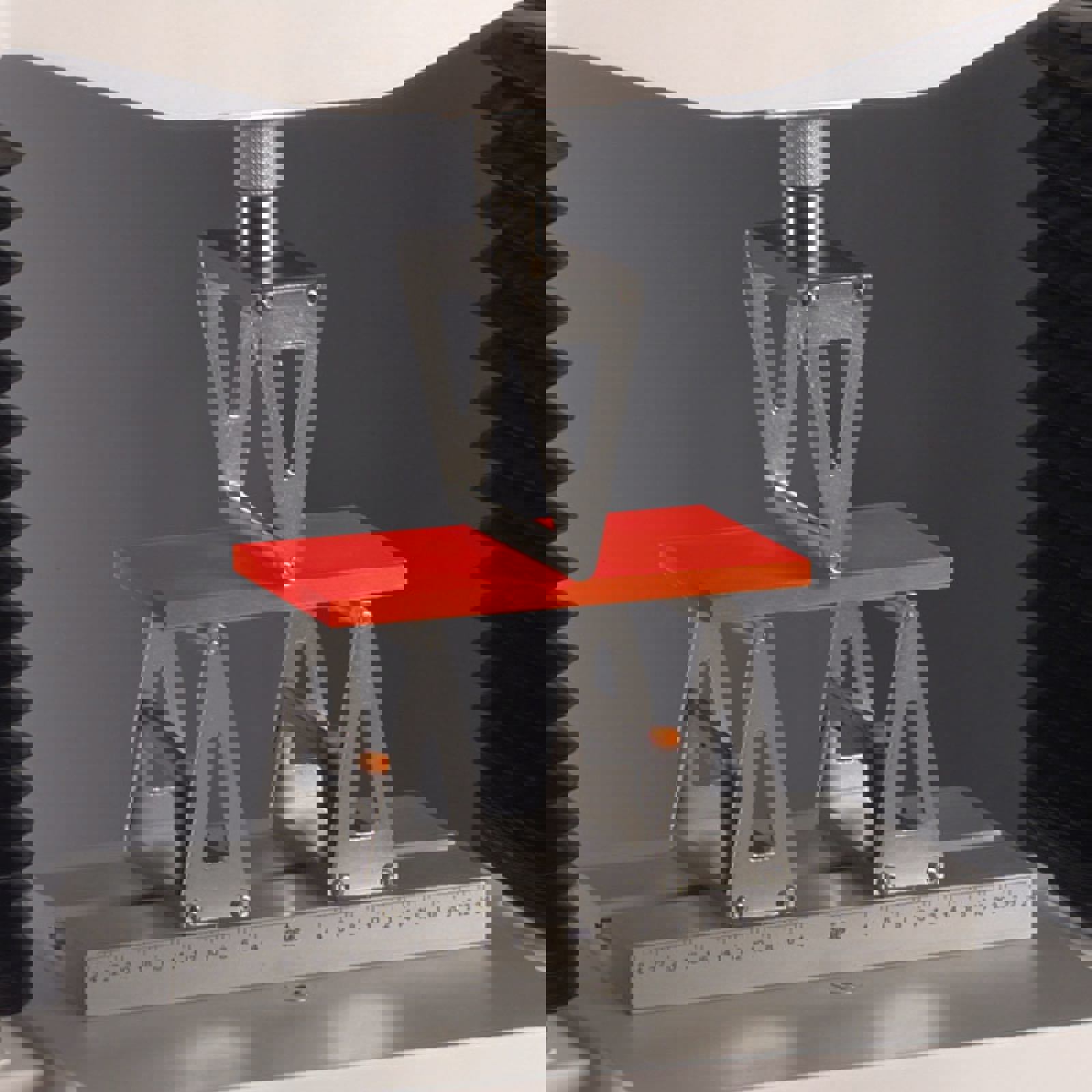
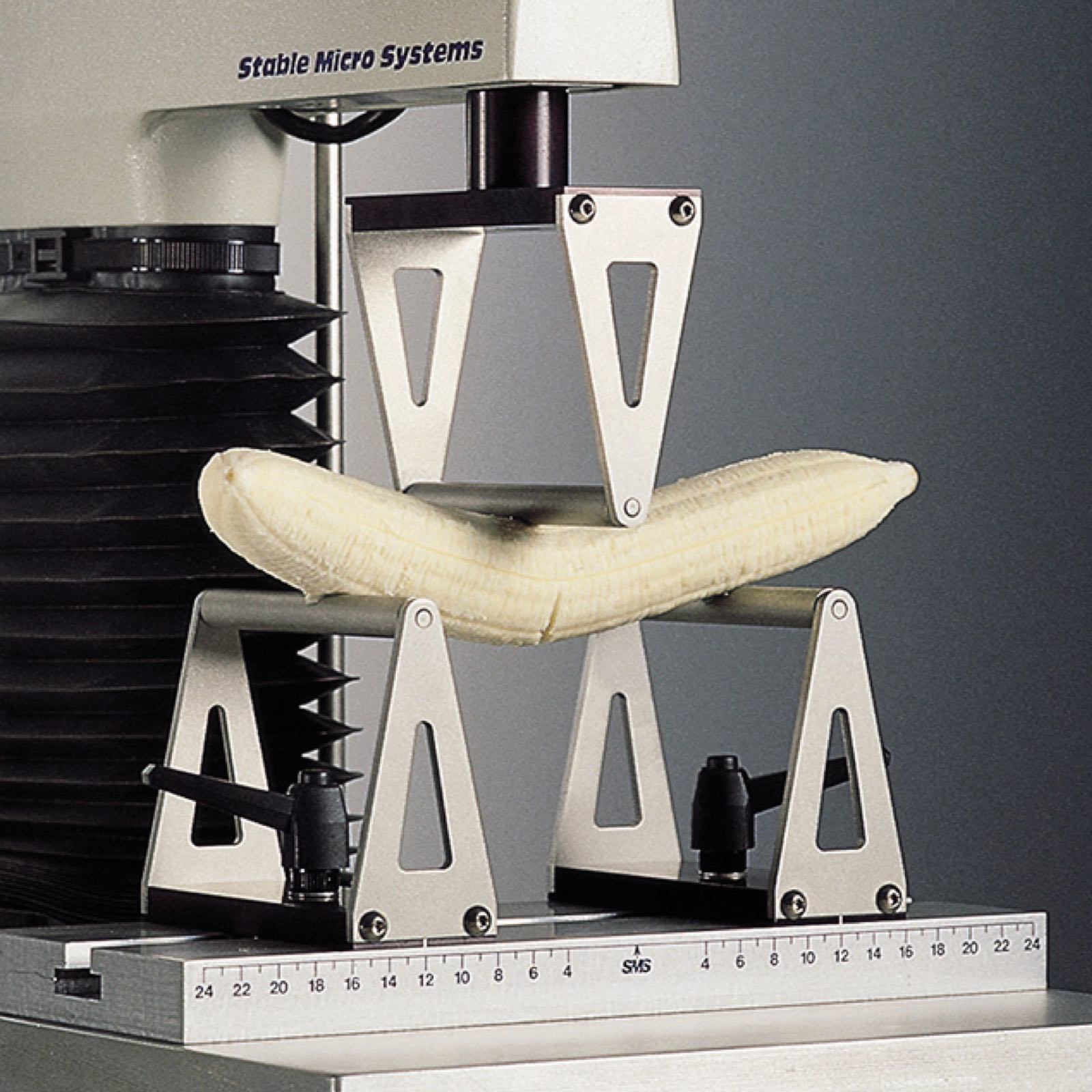
Breaking strength/stress of rigid samples can be determined by performing a three point bend test. A test specimen of either rectangular or circular cross-section is supported as a beam between two supports that are a known distance apart. A compressive deflection is applied at a constant rate to the centre of the sample (which is also central to the supports) until either a predetermined force value is reached or the specimen breaks.
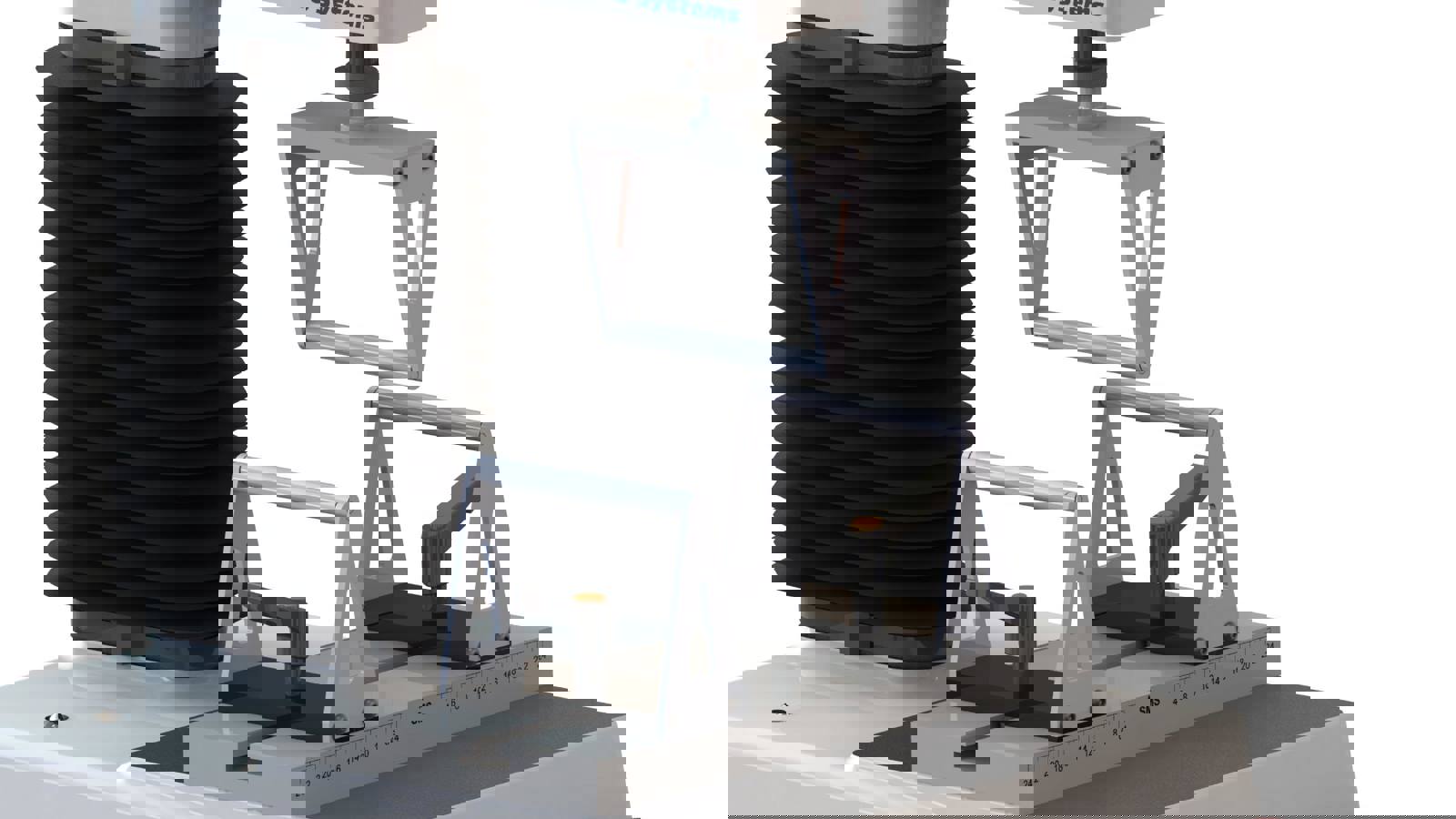
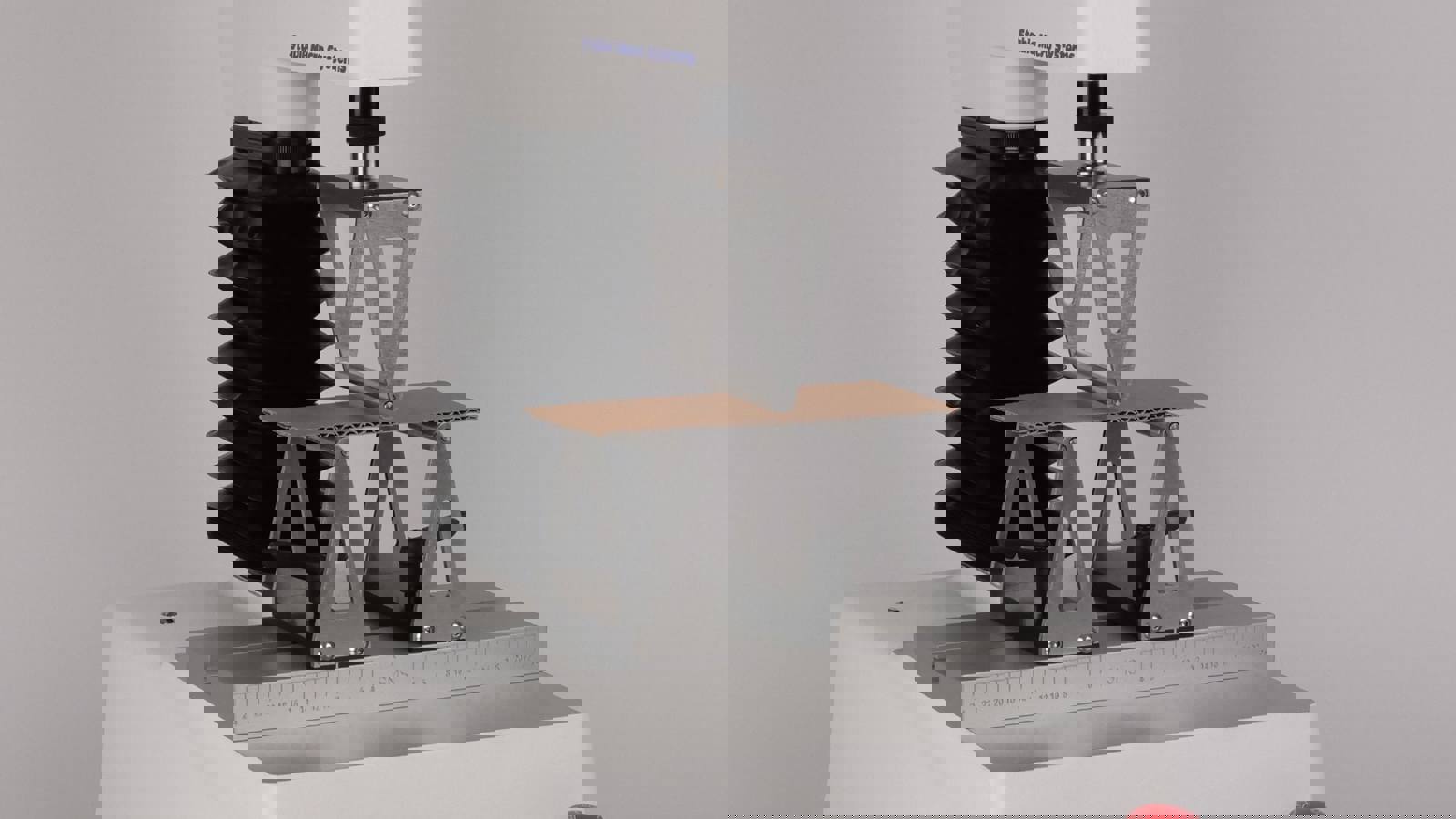
This large Three Point Bend Rig provides a base with graduated variable support length up to 240mm and accommodates samples up to 90 mm wide. A flexure unit is attached to the Load Cell. Rollers are provided on both supports and the flexure unit, to minimise friction during the test. Typical applications include measuring the break strength of biscuits, chocolate bars and packaging. A test may, for example, be used to assess the effect of different ingredients/processes used, or to examine typical finished product problems such as moisture uptake.
Measurements include flexural stress, flexural stress at break, flexural strength, conventional deflection, flexural stress, flexural strain, flexural strain at break, flexural strain at flexural strength, flexural strain at maximum flexural stress, flexural modulus.
The breaking strength (force per unit width) or breaking stress (force per unit area) of the sample is taken as the maximum strength or stress value of the curve. Other textural characteristics that may be of interest are the distance to break and the gradient of the slope during application of force. The distance to break gives an indication of the brittleness of the sample as this shows how far a sample can be deformed before fracture. The gradient of the slope indicates sample toughness; the higher the gradient, the tougher the sample.
How does the Three Point Bend Rig work?
Typical graph

Ideal sample form
A self-supporting material with maximum width of 90mm.
Benefits and limitations
- Rollers reduce friction.
- Enables wider and longer samples to be tested with greater support distance.
- Not ideal for the testing of small samples.
Technical information
Installation

Full installation instructions are provided within the Education Zone of the latest Exponent/Connect software version and on the technical information sheet accompanying this product.
Chemical compatibility
Stable Micro Systems probes and attachments are commonly made from four materials: anodised aluminium (AA6082 T6), stainless steel (316 T), Delrin (acetyl copolymer) and Perspex (polycarbonate).
In general use, probes and attachments made from these materials will be suitable for testing food products and inert non-food materials.
The four materials listed above are not universally resistant to all types of chemicals and as such the compatibility of the probe/attachment material with the product (to be tested) must be established to prevent damage to the probes and attachments. If the compatibility of the product with the probe is unknown to the customer then the chemical information about the product (Material Safety Data Sheet or Product Data Sheet) should be submitted to Stable Micro Systems. Stable Micro Systems will then assess the suitability of the probe/attachment material for use with the product and advise accordingly. If this advice is not sought then Stable Micro Systems will not accept liability for probes/attachments damaged by chemical attack from the product being tested.
Cleaning and maintenance
All probes and attachments may be cleaned in warm (or hand hot) water using a mild detergent. A soft brush may be used but abrasive cleaning aids should be avoided. Stable Micro Systems products should not be microwaved or cleaned in a dishwasher.
Screw threads should be lightly lubricated after drying using a light lubricant, e.g. petroleum jelly, mineral oil. This will aid the fitting and unscrewing of the item. Each component of a probe or attachment should be wrapped separately when stored, to avoid scratching or chipping. This will safeguard against any unnecessary damage to the accessory.
