

Measure the mechanical properties of medical devices
Understand the multiple approaches used by a Texture Analyser to determine the mechanical properties of medical devices.

Why measure the mechanical properties of medical devices?
The measurement of mechanical properties in medical devices represents an evolving and crucial scientific practice that is expanding from its roots in industries like pharmaceuticals, food, and cosmetics.
Texture analysis, encompassing properties such as firmness, adhesiveness, cohesiveness, tackiness, swelling, fatigue, and relaxation behaviour, now plays a pivotal role in evaluating medical devices.
In many cases, standardised methods are lagging behind the rapid pace of product development. The Texture Analyser, for instance, facilitates measurements ranging from the actuation force of inhalers to the compressive strength of stents, contact lenses, medical adhesives, and the firmness of breast implants.
Regulatory bodies, including the FDA, increasingly rely on this technology for evaluating medical devices. Moreover, the patent literature increasingly leans on texture analysis as a quantitative tool for claim validation.
The Texture Analyser by Stable Micro Systems offers flexibility, accuracy, and a straightforward calibration process, enabling high-precision measurements for single tests or cyclic testing of active implants like diaphragms, pumps, and switches.
The scientific measurement of mechanical properties in medical devices is essential for ensuring safety, efficacy, and innovation within the healthcare industry, backed by cutting-edge technology and regulatory compliance.



How a Texture Analyser can be applied to medical device mechanical property measurement?
In the medical device industry, the safety, functionality, and reliability of products are of paramount importance. Mechanical properties, such as hardness, flexibility, and adhesion, can influence the performance of medical devices. The use of a Texture Analyser for assessing these properties offers several benefits:
- Ensuring patient safety: By measuring properties like puncture resistance or tensile strength, manufacturers can ensure that devices like catheters or stents won't break or deform during use, preventing potential harm to patients.
- Device functionality: For devices such as surgical sutures or staples, their holding power and flexibility can be quantified using a Texture Analyser, ensuring they perform their intended function effectively.
- Optimising material selection: Medical devices can be made of a variety of materials, from metals to polymers. By analysing the mechanical properties of these materials, manufacturers can select the most suitable one for a specific application
- Adhesion testing: For devices like wound dressings or adhesive-backed monitoring pads, understanding adhesive strength is vital. A Texture Analyser can quantify how strongly these devices adhere to skin and how easily they can be removed without causing injury or discomfort.
- Durability and longevity: Implantable devices, like joint replacements or heart valves, need to be durable and long-lasting. Mechanical property testing can provide insights into the expected lifespan of these devices under physiological conditions.
- Compliance with standards: Regulatory bodies, like the FDA or the European Medicines Agency, set specific standards for the mechanical properties of medical devices. Using a Texture Analyser ensures that devices meet these standards, aiding in regulatory approvals.
- Product development and innovation: During the design and development phase, a Texture Analyser can help researchers assess prototypes, optimising designs for safety, comfort, and functionality.
- Quality control and batch consistency: Consistent mechanical properties across production batches are crucial. Regular testing ensures that each batch of devices maintains the required standards.
- Predicting wear and tear: By simulating repeated use or stress, manufacturers can predict how a device might wear over time, enabling them to make design improvements or provide accurate usage guidelines.
- Customisation for patient needs: Some medical devices, especially in orthopaedics, might need customisation based on patient-specific needs. Understanding mechanical properties can aid in this customisation, ensuring devices fit and function optimally.
- Claims substantiation: If a manufacturer claims a device is "30% more flexible" or "twice as adhesive," these claims can be empirically substantiated using a Texture Analyser, bolstering the product's marketing efforts and credibility.
Texture analysis ensures that medical devices meet rigorous standards for safety, performance, and patient comfort. As medical devices often interact directly with the human body, understanding their mechanical properties is paramount to ensure their desired functionality and avoid potential complications.
Typical measurements
A Texture Analyser can be employed to determine a variety of properties essential for the performance and end-user experience of medical devices.
Here are some of the key mechanical properties that can be measured for medical devices:
By utilising a Texture Analyser, manufacturers and researchers in the medical device industry can gain vital insights into the mechanical behaviour of their products, ensuring that they perform optimally under real-world conditions and meet rigorous safety and quality standards.
Typical graphs indicating relevant mechanical property parameters


Typical product test and graph
Case studies
Whether its providing the solution for Leo Pharma to measure mechanical strength of microneedles or offering a method for Queen’s University Belfast to measure compressive strength of intravaginal rings, a Texture Analyser is adaptable and flexible in its application to measure the bespoke mechanical properties of your product and then enable its quality to be controlled in your manufacturing to guarantee consistency and customer satisfaction.
With deep expertise in physical property measurement of medical devices, we’re well equipped to support innovation in the alternative protein sector – just ask our customers.
Probes and attachments for measuring the mechanical properties of medical devices
A wide range of probes and attachments can be integrated with our instruments, allowing testing to be precisely adapted to the material or product under evaluation. Applications include penetration tests to compare needle profiles and their effect on sharpness, compression tests to assess device fatigue or actuation force to measure delivery force from metered dose inhalers.
Over the years, we have collaborated with leading scientists and organisations across diverse industries to design and refine attachments such as the Inhaler Support Rig. When a suitable solution does not already exist, we develop one – the Universal Syringe Rig is one example, expanding our portfolio of Community Registered Designs and reinforcing our commitment to innovation in solving complex testing challenges.
The examples provided illustrate a selection of specialised attachments and commonly performed measurements within this application area. This list is not exhaustive; a wide range of additional options are available for the testing of medical devices. All instruments in the Texture Analyser range can be used to perform the tests described.
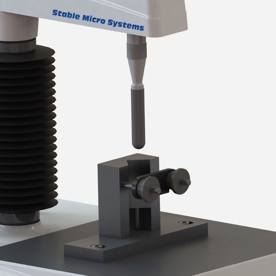
Inhaler Support Rig
The metering valve, whose performance is assessed with this test, is a critical component of a finished metered-dose inhaler.
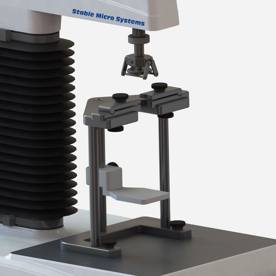
Universal Syringe Rig
Allows measurement of the aspiration and extraction forces of a wide range of syringe types and sizes.
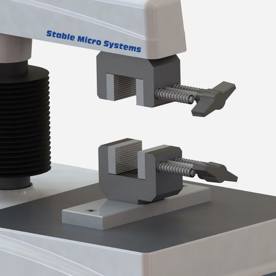
Tensile Grips
Used for the assessment of seal strength (an important characteristic of packaging to ensure sterile integrity).

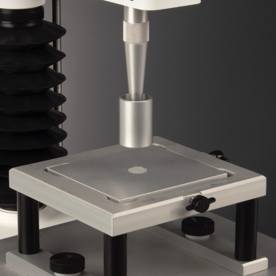
Cylinder Probes
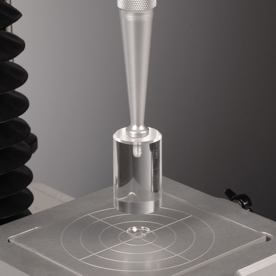
Use to assess the structural integrity of stents; compression characteristics of e.g. microneedles; Contact Lens compression – provides a measure of mechanical strength and flexibility/rigidity.
We also have standard ISO methods and attachments specific to syringe testing.
Test methods
Exponent Connect software includes a comprehensive range of test methods for medical devices, all instantly accessible at the click of a button. We streamline your texture testing process, ensuring faster access to methods and ready-to-use analysis files for your product properties.
Using the Texture Analyser for new medical device material and product ideas
The medical device industry is ever-evolving, with advancements aimed at improving patient outcomes, reducing invasiveness, and incorporating the latest technological trends. Here are some of the innovative ingredient and product ideas:
Recent research
Here is some recent interesting research in medical device product development using the Texture Analyser:
- Anti-biofilm multi drug-loaded 3D printed hearing aids
- Using a texture analyser to objectively quantify foot orthoses
- Multifunctional conductive hydrogels based on the alkali lignin-Fe3+-mediated Fenton reaction for bioelectronics
- Studies on hydrophobically modified poly (vinyl alcohol) s-based materials for biomedical applications (PDF)
- Hybrid ear cubes for local controlled dexamethasone delivery to the inner ear
- 3D Printable One‐Part Carbon Nanotube‐Elastomer Ink for Health Monitoring Applications
- Development of a biodegradable subcutaneous implant for prolonged drug delivery using 3D printing


